App Screenshots


Medieval realm management and governance simulation
- Widowed or jilted rulers can find love and marry again
- Fixed crashes in marriage, war, and succession events
- Continuing your legacy as your heir after watching an ad now works reliably
- Many stability and performance improvements
- Other bug fixes
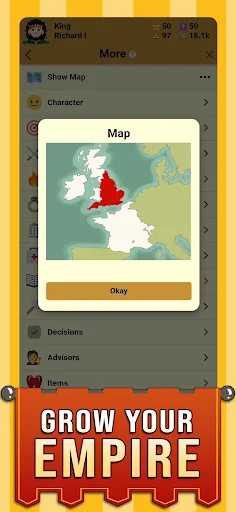
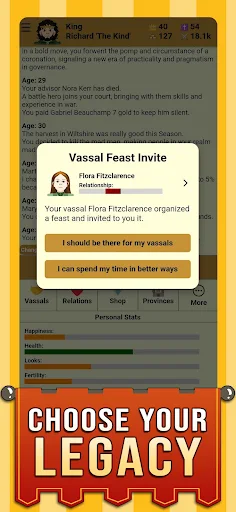
Medieval Age – Life Simulator is a text-driven strategy game that puts players in control of a medieval realm as an emperor, queen, or noble. Rather than focusing on direct battlefield control, gameplay centers on executive decision-making across political, economic, and military channels. Players manage gold, maintain an army, uphold public order, and handle border disputes, while also guiding the education of heirs to secure their lineage. Hosting feasts, arranging hunts, and embarking on pilgrimages directly influence realm morale and religious standing, creating a balancing act between domestic stability and territorial expansion.
Progress in the game relies on managing public order and internal finances alongside territorial growth. Every policy decision carries consequences that affect multiple areas of the realm. Adjusting taxation rates might generate necessary gold for army upkeep, but it can simultaneously destabilize public satisfaction. When low morale or civil unrest threatens order, players must pivot resources toward public events, such as hosting grand feasts or settling regional disputes, to restore domestic stability before economic collapse occurs.
Expanding borders requires both tactical combat and diplomatic maneuvering. Players initiate political schemes and intrigues to weaken rivals or secure strategic leverage before launching military campaigns against neighboring territories. Conquest alone does not guarantee long-term control; captured lands require immediate defense and governance to prevent uprisings or counterattacks from surviving rivals. Connecting political subterfuge directly to military actions ensures that preparing for war is as vital as the battle itself.
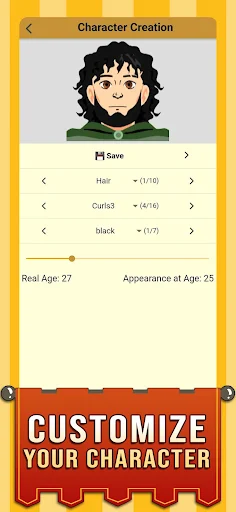
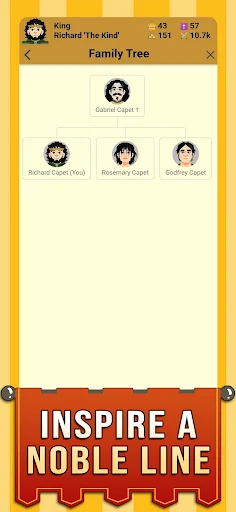
Beyond managing borders and troops, players direct court affairs and dynastic succession. Educating heirs allows players to shape the future leadership, traits, and policies of their realm long before a transition of power occurs. Outside the court, organizing hunts, staging celebrations, and making religious pilgrimages serve as strategic tools to boost prestige, gain faith, and keep subject loyalty high throughout a ruler’s lifetime.
Your comment was submitted and is awaiting moderation.
Your comment was published.